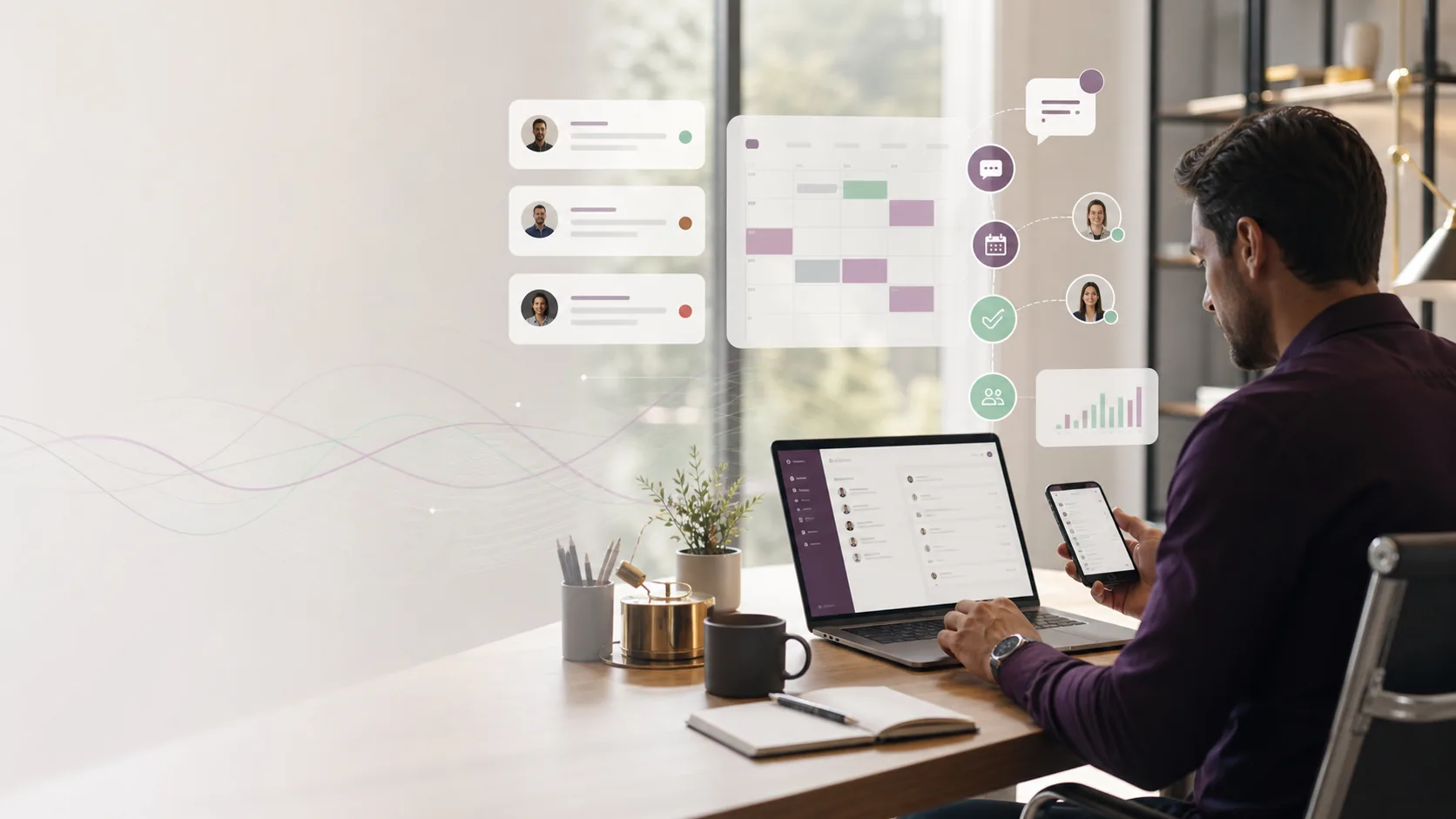
Short answer: an AI lead response agent helps service companies answer new inquiries faster, collect the missing details, and hand qualified leads to the right person.
What the agent should do
The goal is not to replace your team. The goal is to stop good leads from sitting untouched. A useful AI lead response agent monitors new form fills, missed calls, email inquiries, chat requests, and scheduler activity. It can send the first reply, ask qualifying questions, route urgent jobs, and remind the team when a human handoff is needed.
Where service businesses lose leads
- Website forms are checked only a few times per day.
- Missed calls do not receive an immediate text follow-up.
- Quote requests are answered once and never nurtured.
- Urgent jobs are not separated from low-fit inquiries.
- New leads are not logged consistently in a CRM or spreadsheet.
The first workflow to automate
Start with the first five minutes after a lead arrives. The agent should acknowledge the inquiry, collect the service address or project details, ask about urgency, confirm the preferred contact method, and notify the right person. That first response does not need to be fancy. It needs to be fast, accurate, and monitored.
What makes it safe
Brick & Pixel designs AI workflows with constraints: approved messages, escalation rules, human review where needed, and clear boundaries around what the agent can promise. For many businesses, the best agent is not fully autonomous. It is a reliable first responder that keeps momentum until a person takes over.
How Brick & Pixel helps
Brick & Pixel builds AI agent workflows that connect the website, forms, lead alerts, follow-up messages, and team handoff rules. If traffic is weak too, combine this with AI search optimization so better visibility has a better response path.