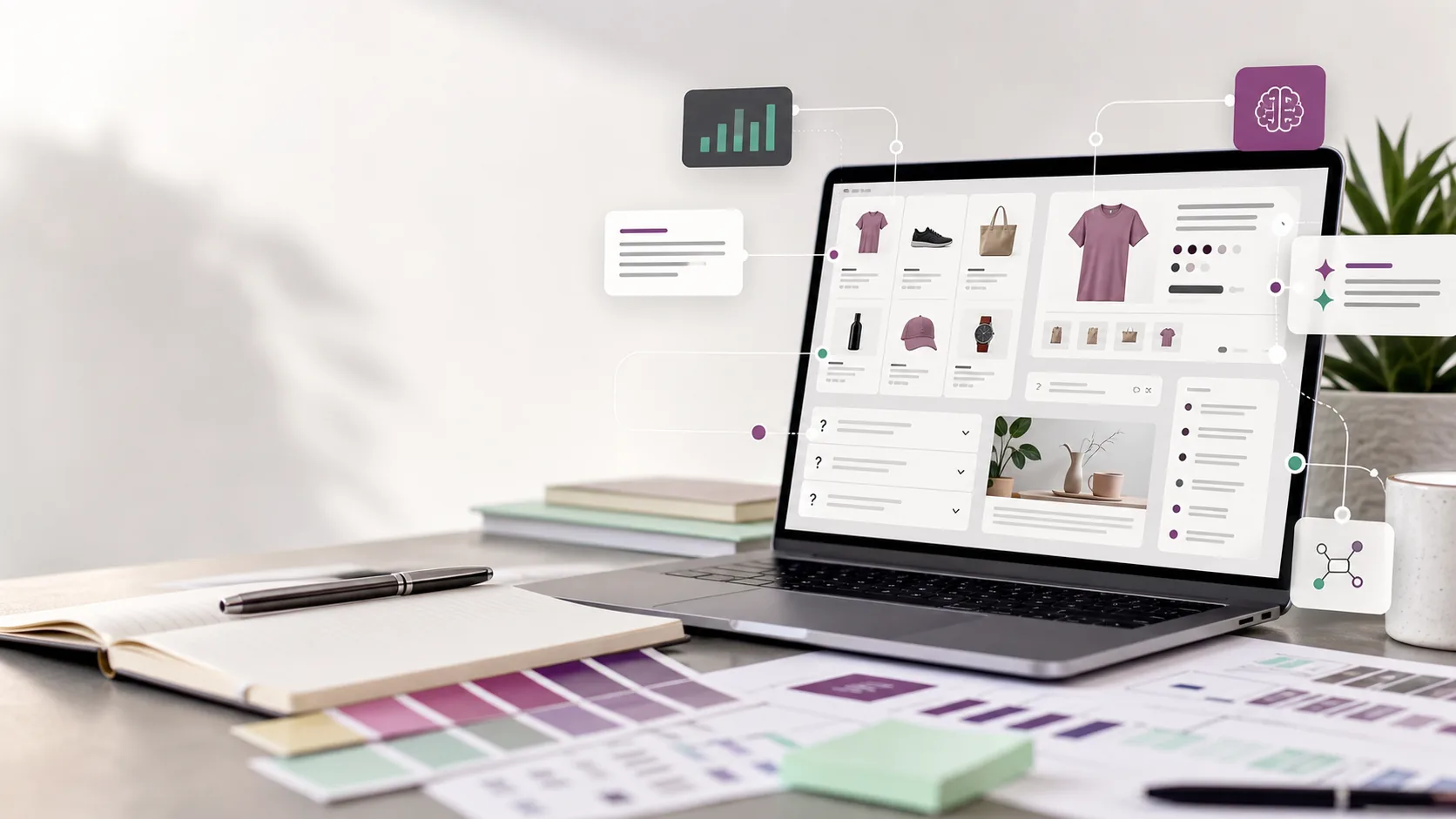
Short answer: Shopify GEO improves the way your store explains products, categories, policies, and brand expertise so AI search tools can summarize and recommend it accurately.
The common Shopify problem
Many Shopify stores are technically live but strategically thin. Product pages borrow manufacturer descriptions. Collection pages have no buying guidance. Store policies are generic. Brand pages sound polished but do not explain expertise. That leaves AI tools with inventory but little judgment.
Generative engine optimization fills that gap. It adds the practical information shoppers ask before they buy: what to choose, why it matters, who it fits, what to compare, what to avoid, and how to get help.
Where to add answer-ready content
- Collection intros that explain the category, use cases, and buying criteria.
- Product pages with sizing, fit, material, compatibility, care, warranty, shipping, pickup, and return details.
- Comparison pages for common choices between product types or price points.
- FAQ blocks that answer real pre-purchase objections.
- Brand and store pages that establish expertise, local presence, services, and customer proof.
How to avoid writing generic AI content
Good Shopify GEO is specific. Instead of writing "we offer quality products," explain which products, for whom, under what conditions, and what a buyer should consider. Use examples from the store floor, customer questions, returns, fittings, consultations, and support tickets. Those details create pages worth citing.
How Brick & Pixel helps
Brick & Pixel builds Shopify content structures that make products and collections easier to understand. For existing Shopify stores, we improve collection copy, service pages, metadata, internal links, and answer-ready FAQs. For stores moving platforms, we build the GEO foundation during the Shopify migration.